
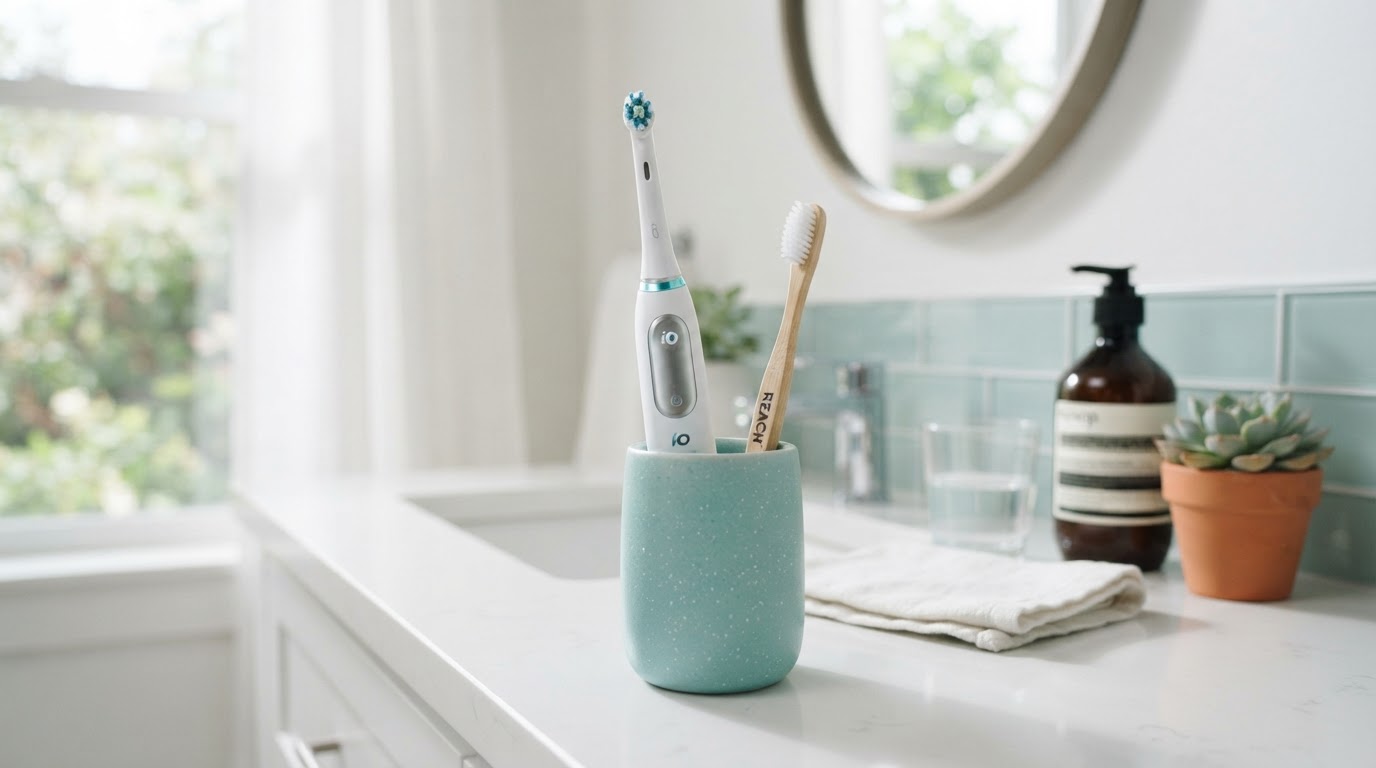
Are Electric Toothbrushes Worth It? An Honest Answer
Walk down the toothbrush aisle and the price tags go from three dollars to two hundred. Here's what the evidence actually says about electric brushes.
Walk down the toothbrush aisle and the price tags run from about three dollars to over two hundred, and the packaging makes big promises. Are electric toothbrushes actually worth it, or is this one of those places where a manual brush and good technique serve you just as well? The honest answer is: it depends on you — but for a lot of people, the answer is yes.
What the research says
The evidence is stronger for electric brushes than most people expect. Reviews of dozens of clinical studies have found that powered toothbrushes with small, oscillating or rotating heads reduce plaque and gingivitis more effectively than manual brushing over the medium term — on the order of an additional several percent reduction in plaque and gum inflammation. That may sound modest, but sustained over years, the difference in gum health and cavity risk is real. Sonic-style brushes also perform well, generally outperforming manual brushing though with slightly less consistent data than oscillating heads.
Who benefits most from going electric
Some patients gain far more than others. If you have arthritis, limited hand mobility, or a condition that makes fine brushing movements difficult, an electric brush is a genuine quality-of-life upgrade. If you brush too hard — and many people do, wearing notches into enamel and gums at the gumline — a brush with a pressure sensor stops that damage in its tracks. If you rush, a built-in two-minute timer and quadrant pacing fixes the most common brushing failure. And if you wear braces, an electric brush makes it dramatically easier to clean around brackets and wires.
Who should stick with manual
Here's the part the ads don't say: a manual brush, used correctly for two full minutes, twice a day, is perfectly effective. Children can learn great technique with a manual brush, and some patients simply prefer the feel and control. If your checkups have been consistently clean and your gums healthy with a manual brush, there's no dental reason to switch. The best toothbrush is the one you'll actually use properly — and if that's a three-dollar manual, it's a bargain.
What matters more than the brush you buy
Technique, duration, and consistency beat any hardware. Two minutes, twice a day, at a 45-degree angle along the gumline, gently — plus daily cleaning between the teeth, which no toothbrush of any kind can reach. A two-hundred-dollar brush with thirty seconds of hurried scrubbing loses to a manual brush used patiently. Replace brush heads (or the whole manual brush) every three to four months, and don't share handles or heads.
Our practical advice
If you're buying one electric brush for the family without special needs, a mid-priced oscillating model with a pressure sensor and timer covers nearly everything that matters; the ultra-premium features are mostly marketing. Bring your brush — electric or manual — to your next cleaning, and we'll watch your technique and give you honest, specific feedback. It's the most valuable two minutes of the visit, and it's free.
Questions about your brush, your technique, or anything else? Call (615) 581-5000 or book online — we love talking through this stuff.
Ready to see us?
We'd love to help you and your family keep your smiles healthy. Book your visit online or give us a call.
Keep reading

November 3, 2026
Sensitive Teeth: Why They Hurt and What Actually Fixes It
That sharp zing from cold water or ice cream has real causes — and most of them are treatable. When sensitivity is a warning sign, and when it's simple.
October 27, 2026
Gum Disease: The Silent Problem You Can Catch Early
Gum disease is the leading cause of tooth loss in adults — and in its early stages, it's completely reversible. Here's how to spot it and stop it.