
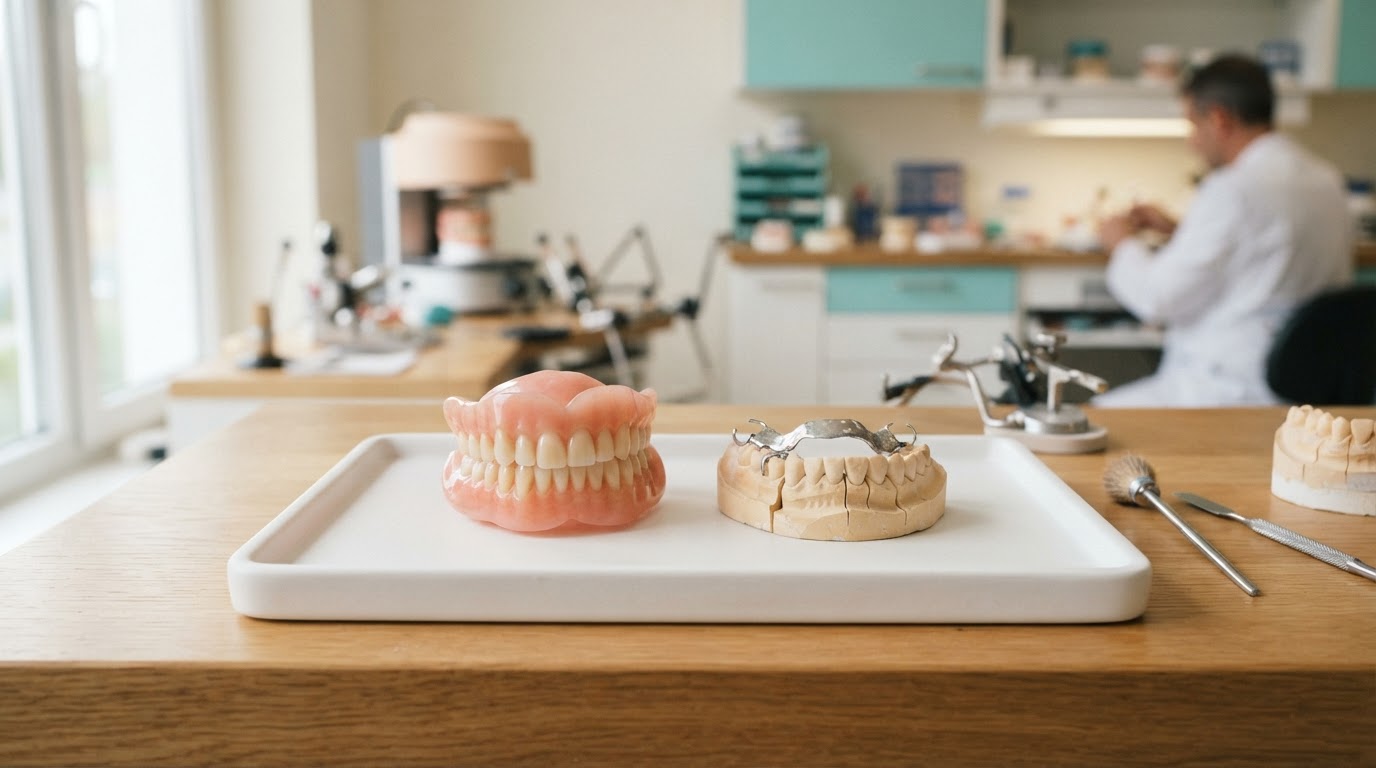
Dentures and Partials
Missing teeth affect how you eat, speak, and feel about your smile — dentures and partials bring all three back.
Eat the foods you love
Well-fitted dentures let you chew comfortably again, so you can get back to meals you'd started avoiding.
Speak clearly
Missing teeth change how words sound. Dentures support your lips and tongue so you can talk with confidence.
Support your face
Teeth give your cheeks and lips their shape. Replacing them restores the natural fullness of your face.
Affordable & proven
Dentures remain one of the most reliable, budget-friendly ways to replace several or all teeth.
Removable dental replacements, or dentures, are a common service that we provide for our clients. We provide both complete dentures (for when all teeth are missing) and partial dentures (for when some teeth are missing).
Complete dentures vs. partial dentures
A complete (or full) denture replaces all the teeth in an upper or lower arch when every tooth is missing. A partial denture fills in the gaps when you still have some healthy natural teeth, using a metal or acrylic framework that clasps onto those teeth for support. We provide both, custom-made to fit your mouth and to look natural — a far cry from the obvious, uncomfortable 'false teeth' of decades past.
Conventional vs. immediate dentures
There are both conventional and immediate dentures. Conventional dentures are made after the teeth have been removed and are placed 8 to 12 weeks after removal, once the gums have healed and reshaped. Immediate dentures are made in advance and can be positioned as soon as the teeth are removed, so you never have to go without teeth — though they'll need to be relined or replaced once your mouth finishes healing.
The process, step by step
Getting dentures takes a few visits over several weeks. We start with an exam and any necessary extractions or treatment to get your mouth ready. Then we take impressions and measurements so the denture fits precisely and lines up with your bite. We'll have you try in a model so you can see the shape and color before the final denture is made, and once it's ready we make any small adjustments so it's comfortable and secure.
Patients may need dentures for a variety of reasons, and we promise to communicate with you throughout the process in order to provide the best dental care possible.
What to expect at first
New dentures take some getting used to — that's completely normal. At first they may feel bulky, your speech may sound a little different, and eating will take practice. Start with soft foods cut into small pieces and gradually work your way back to your normal diet. Any sore spots usually resolve with a quick adjustment at our office; don't try to adjust the denture yourself.
Keeping them in place
A well-made denture fits snugly, but some patients — especially those with lower dentures — benefit from extra stability. Denture adhesives can help, and for a more permanent solution, implants can anchor a denture firmly in place so it doesn't slip when you talk, laugh, or eat. Ask us about implant-supported options if stability is a concern.
Caring for your dentures
Treat your dentures like the investment they are. Brush them daily with a soft denture brush and cleaner (not regular toothpaste, which can scratch them), and soak them overnight to keep them moist and comfortable. Rinse them after meals when you can, and keep up with regular dental visits even if you have no natural teeth left — we check the fit, look for sore spots or signs of oral cancer, and make sure your mouth stays healthy under the denture.
Dentures can solve a wide range of problems for patients who have had their teeth removed, allowing them to use their mouths more normally again — like they were able to before losing their teeth. To learn more about our denture services and how we can care for your oral health, please don't hesitate to contact us today.
Frequently asked questions
Still curious? We're happy to answer more at your visit.
- How long does it take to get used to new dentures?
- Most patients adjust within a few weeks. At first they may feel bulky and eating takes practice — start with soft foods cut small and work up from there. Sore spots are normal and we'll adjust them quickly at the office.
- Should I choose a partial or a full denture?
- If you still have healthy teeth that can support a partial, a partial denture is usually the better choice — it keeps those teeth in place and feels more secure. We'll examine your mouth and recommend honestly which option fits you.
- Can implants hold my denture in place?
- Yes. Implant-supported dentures snap firmly onto small implants so the denture barely moves. It's life-changing for lower dentures in particular, which tend to loosen over time. Ask us whether you're a candidate.
- How often should dentures be replaced?
- Dentures typically last 5–10 years depending on wear and how your mouth changes over time. If yours feel loose, cause sore spots, or look worn, it may be time for a reline or a new set. We'll let you know at your checkups.
Questions about dentures and partials?
Our team is happy to walk you through your options before you ever sit down in the chair.