
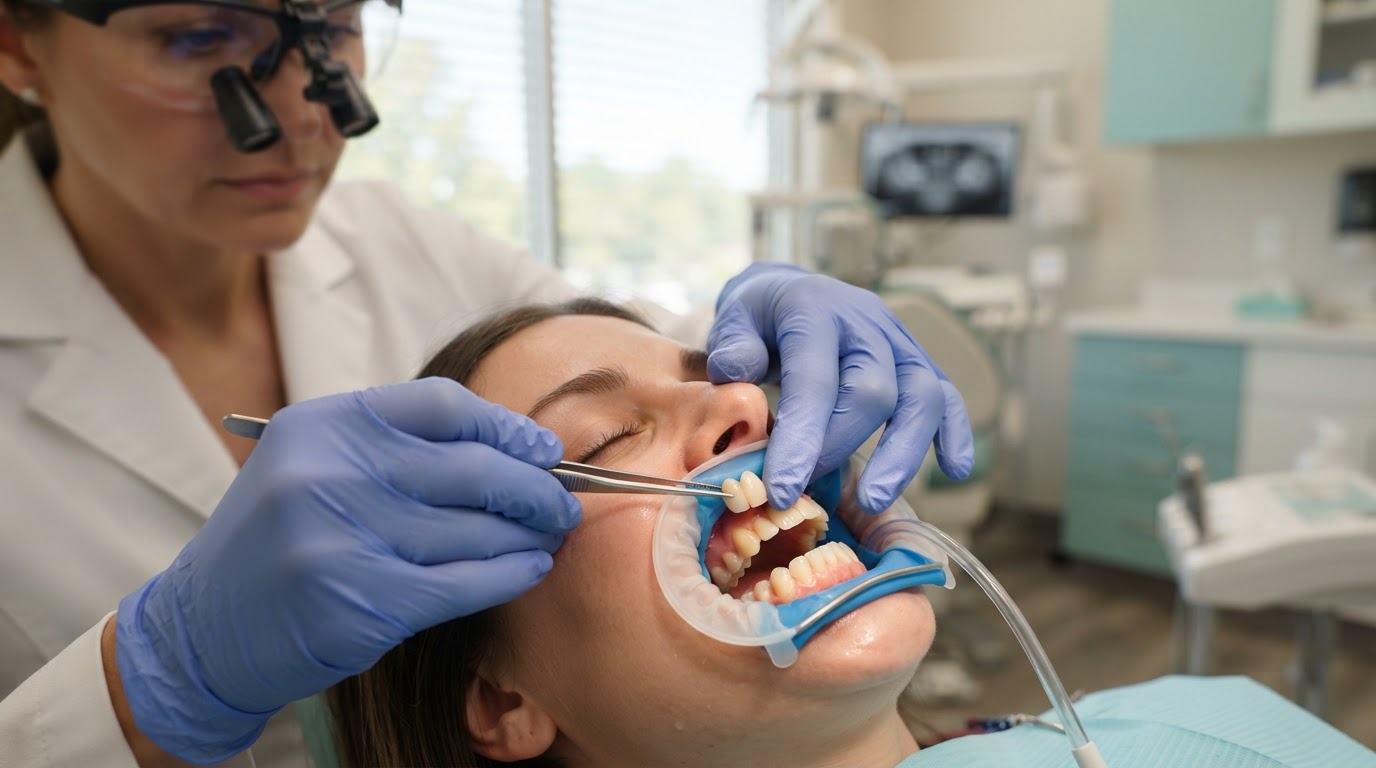
Restorative Dentistry
Broken, decayed, or missing teeth shouldn't keep you from smiling — or eating the foods you love.
Chew comfortably again
Damaged or missing teeth make eating harder and can strain surrounding teeth. Restorations rebuild your bite so you can eat without pain or worry.
Protect the teeth you have
A crown or filling keeps a weakened tooth from cracking further and prevents decay from reaching the nerve.
Look natural
Modern fillings, crowns, and bridges are matched to the color and shape of your own teeth — most people won't be able to tell.
Prevent bigger problems
Treating a small problem early costs less and hurts less than waiting until it becomes an emergency.
Here at White House Dental, we are proud to offer dental restorations so that you can be proud of your smile.
What restorative dentistry includes
Restorative dentistry covers any treatment that repairs or replaces damaged teeth. We offer many different types of dental restorations to replace broken or missing teeth, and we'll walk you through every option before we recommend one.
- Fillings We use tooth-colored composite to fill in cavities and cracked teeth so they look natural and stay strong.
- Crowns A crown covers and strengthens a damaged tooth, restoring its original shape and size and protecting weak or broken teeth.
- Bridges Bridges replace gaps in your smile with artificial teeth, fixed or removable, in porcelain, gold, or alloys — we'll help you pick the right type.
- Implants Implants are replacement roots topped with a crown, rebuilding missing teeth so securely they feel like your own.
- Dentures & partials Full or partial dentures restore a whole arch or fill in gaps when several teeth are missing.
How the process works
Every restoration starts with an exam and x-rays so Dr. Sanford can see exactly what's happening and plan the right treatment. We use a type of cement to fill in any broken teeth so that they look natural, and when you're missing teeth we have a lot of different options. Once we're finished with your mouth, you'll love showing off your new smile.
For larger restorations like crowns, bridges, and implants, the work happens over two or more visits: one to prepare the tooth and take impressions, and a second to place the final restoration. We'll explain the full timeline at your first appointment so there are no surprises.
Caring for your restorations
Fillings, crowns, bridges, and implants are built to last for years, but they still need everyday care. Brush twice a day with a fluoride toothpaste, floss daily, and keep up with your regular cleanings. Avoid chewing ice or hard objects, and tell us right away if a restoration feels loose or uncomfortable — a quick adjustment now can save the tooth later.
Don't hesitate to contact us if you have any questions about dental restorations. We'll be glad to help you get the smile that you deserve.
Frequently asked questions
Still curious? We're happy to answer more at your visit.
- Will a filling or crown match my other teeth?
- Yes. We use tooth-colored composite for fillings and custom-shade crowns so your restoration blends in with your natural smile. Most people won't be able to tell which tooth was repaired.
- How long do crowns and bridges last?
- With good home care and regular checkups, crowns and bridges commonly last 10–15 years or longer. The key is keeping the surrounding teeth and gums healthy so the restoration stays secure.
- Are implants right for everyone?
- Most adults with healthy gums and enough jawbone are good candidates, but we'll need an exam and x-rays to be sure. If bone is thin, a graft may be recommended first. We'll walk you through it honestly.
- Does insurance cover restorative work?
- Most dental insurance plans cover a portion of restorative treatment like fillings, crowns, and bridges. We'll help you understand your benefits before treatment begins, and financing through CareCredit is available if you need it.
Questions about restorative dentistry?
Our team is happy to walk you through your options before you ever sit down in the chair.